Announcement
Get Ready for INDUS CUP 2K26! | Dates: 5–10 January 2026 | Stand a Chance to Win Cash Prizes up to ₹10,00,000!...Read more Get Ready for INDUS CUP 2K26! | Dates: 5–10 January 2026 | Stand a Chance to Win Cash Prizes up to ₹10,00,000!
We are excited to announce the Indus Hackathon 2025, an exhilarating one-day event organized by the CSE Department of Indus University....Read more We are excited to announce the Indus Hackathon 2025, an exhilarating one-day event organized by the CSE Department of Indus University.
26th ISTE Faculty Annual State Convention will be held at Indus University on April 27, 2023....Read more 26th ISTE Faculty Annual State Convention will be held at Indus University on April 27, 2023.
Get Ready for INDUS CUP 2K26! | Dates: 5–10 January 2026 | Stand a Chance to Win Cash Prizes up to ₹10,00,000!...Read more Get Ready for INDUS CUP 2K26! | Dates: 5–10 January 2026 | Stand a Chance to Win Cash Prizes up to ₹10,00,000!
We are excited to announce the Indus Hackathon 2025, an exhilarating one-day event organized by the CSE Department of Indus University....Read more We are excited to announce the Indus Hackathon 2025, an exhilarating one-day event organized by the CSE Department of Indus University.
26th ISTE Faculty Annual State Convention will be held at Indus University on April 27, 2023....Read more 26th ISTE Faculty Annual State Convention will be held at Indus University on April 27, 2023.












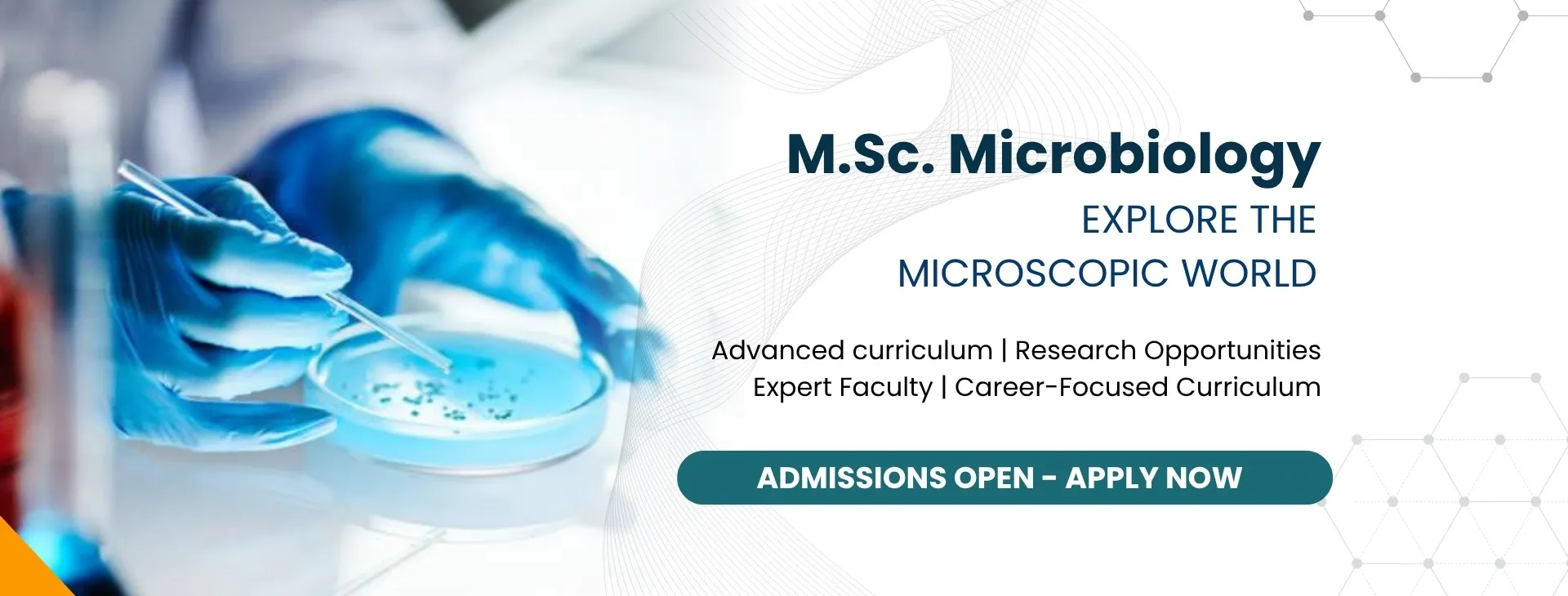
The Department of Microbiology at Indus University focuses on advanced scientific education, research, and innovation in microbiological sciences. The department integrates theoretical knowledge with laboratory-based experimentation, research methodology, and interdisciplinary learning.
Aligned with the National Education Policy (NEP 2020), the department promotes outcome-based education, research orientation, and multidisciplinary academic pathways. Students receive exposure to modern microbiological techniques, analytical tools, and scientific research practices.
Through advanced laboratory training, research collaborations, and project-based learning, the department prepares students for careers in healthcare, biotechnology, pharmaceuticals, environmental science, and academic research.
The M.Sc Microbiology programme at Indus University is a two-year postgraduate course designed to provide advanced knowledge and practical expertise in microbiology.
The programme covers fundamental and applied areas such as Microbial Physiology, Genetics, Biochemistry, Immunology, Environmental Microbiology, and Industrial Microbiology. Students also explore advanced subjects including Molecular Biology, Microbial Biotechnology, Bioinformatics, Medical Microbiology, and Fermentation Technology.
The curriculum emphasizes experiential learning through laboratory training, molecular techniques, and research-based projects. Students undertake dissertation work and research projects that help develop strong analytical, experimental, and scientific communication skills.
The programme prepares graduates for careers in research laboratories, healthcare industries, biotechnology organizations, and higher education institutions.
Students undertake laboratory research projects, seminars, and dissertation work to develop strong research and analytical skills.
Graduates of the programme can pursue careers across research, healthcare, and biotechnology sectors.
Candidates must have completed a Bachelor's degree in Microbiology or a related life science discipline from a recognized university.
Admission shall be conducted as per university norms based on merit and eligibility criteria.
2 Years (4 Semesters)
Students can apply online based on merit.
Candidates may also visit the campus for interaction with the Admission Committee and approval for enrollment.
The M.Sc Microbiology program is a 2-year full-time postgraduate course comprising 4 semesters, designed to provide advanced knowledge in microbiological sciences and laboratory research.
Applicants must have completed a B.Sc degree in Microbiology, Biotechnology, Biochemistry, or another relevant life science discipline with a minimum of 50% aggregate marks from a recognized university.
Yes, students are required to complete a mandatory research dissertation project during the final semesters, enabling them to gain hands-on laboratory experience and scientific research skills.
Graduates can find opportunities in research and development divisions of pharmaceutical companies, healthcare institutions, agricultural research organizations, food processing industries, biotechnology firms, and environmental agencies.
Indus University collaborates with an extensive network of top-tier corporate partners to provide exceptional career opportunities across multiple industries, featuring technology and IT leaders like Amazon, Oracle, Capgemini, e-Infochips, Synoptek, and Rishabh Software. Our engineering, automotive, and manufacturing recruiters include industry giants such as Tata Motors, Siemens, Audi, Kia, SKF, Bridgestone, POSCO, and Adani GAS, while the banking and insurance sectors are strongly represented by IndusInd Bank, IDFC First Bank, Capital First, Bajaj Allianz, and Apollo Munich Health Insurance. Additionally, our students secure dynamic roles with prominent organizations in healthcare, pharmaceuticals, and consumer retail, including Cadila Pharmaceuticals, eClinicalWorks, Godrej, JSW Paints, Decathlon, and Jaro Education, ensuring a comprehensive and robust placement ecosystem for all our graduates.