Announcement
Get Ready for INDUS CUP 2K26! | Dates: 5–10 January 2026 | Stand a Chance to Win Cash Prizes up to ₹10,00,000!...Read more Get Ready for INDUS CUP 2K26! | Dates: 5–10 January 2026 | Stand a Chance to Win Cash Prizes up to ₹10,00,000!
We are excited to announce the Indus Hackathon 2025, an exhilarating one-day event organized by the CSE Department of Indus University....Read more We are excited to announce the Indus Hackathon 2025, an exhilarating one-day event organized by the CSE Department of Indus University.
26th ISTE Faculty Annual State Convention will be held at Indus University on April 27, 2023....Read more 26th ISTE Faculty Annual State Convention will be held at Indus University on April 27, 2023.
Get Ready for INDUS CUP 2K26! | Dates: 5–10 January 2026 | Stand a Chance to Win Cash Prizes up to ₹10,00,000!...Read more Get Ready for INDUS CUP 2K26! | Dates: 5–10 January 2026 | Stand a Chance to Win Cash Prizes up to ₹10,00,000!
We are excited to announce the Indus Hackathon 2025, an exhilarating one-day event organized by the CSE Department of Indus University....Read more We are excited to announce the Indus Hackathon 2025, an exhilarating one-day event organized by the CSE Department of Indus University.
26th ISTE Faculty Annual State Convention will be held at Indus University on April 27, 2023....Read more 26th ISTE Faculty Annual State Convention will be held at Indus University on April 27, 2023.











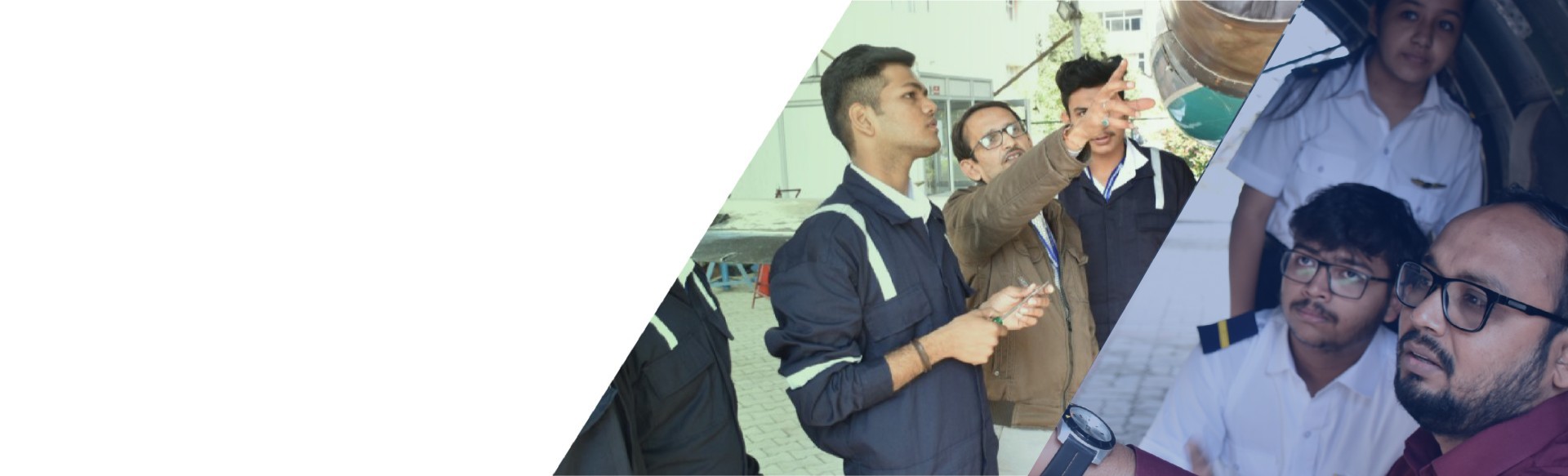
The Indus Institute of Aviation Technology & Engineering (IIATE), Indus University provides specialized engineering education in aviation, aerospace technologies, and aircraft maintenance systems. The institute integrates engineering fundamentals with aviation regulatory standards and practical aircraft maintenance training.
The B.Tech Aerospace Engineering + DGCA AME programme combines aerospace engineering education with professional Aircraft Maintenance Engineering (AME) training, enabling students to develop expertise in both aerospace design and aircraft maintenance.
The programme is conducted in collaboration with the Western India Institute of Aeronautics (WIIA), a DGCA-approved aviation institute, ensuring industry-aligned training and practical exposure.
The department promotes technical excellence, aviation safety awareness, and engineering innovation through advanced laboratories, simulation facilities, and industry interaction.
The B.Tech Aerospace Engineering + DGCA AME programme is a four-year undergraduate degree designed to provide a balanced combination of aerospace engineering knowledge and professional aircraft maintenance training.
Students gain expertise in aerodynamics, propulsion systems, aircraft structures, avionics, and flight mechanics along with DGCA-mandated aircraft maintenance modules.
The curriculum covers aviation legislation, maintenance practices, airworthiness regulations, safety management systems, and aircraft documentation procedures.
Through classroom learning, laboratory training, simulation exercises, and practical exposure, students develop strong technical competence for aviation and aerospace careers.
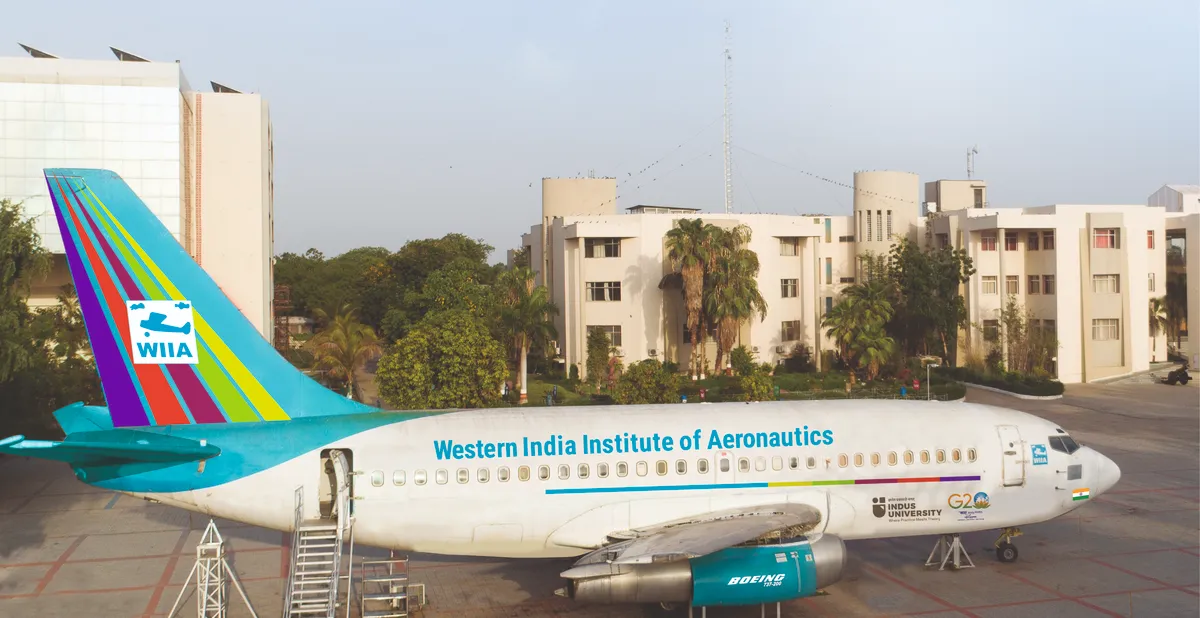
Students apply theoretical knowledge through laboratory experiments, simulations, and technical projects related to aerospace and aircraft systems.
Students gain practical exposure through:
Students develop competencies in:
Graduates have diverse career opportunities across aviation, aerospace, and defense industries.
Always get a fabulous job without devoting much effort to the best Institute of Aircraft Maintenance Engineering. There is immense scope in the aviation industry where they are free from mental pressure as it increases height with every new day.
Duration: 4 years
Medical Fitness: The trainees must be subjected to a medical test before being taken to the training institute by a doctor who possesses an MBBS degree. Aspirants shall not have any physical disabilities or color blindness interfering with removing an Aircraft Maintenance Engineer's duties.
Students apply theoretical knowledge through laboratory experiments, simulations, and technical projects related to aerospace and aircraft systems.
Students gain practical exposure through:
Students develop competencies in:
Graduates have diverse career opportunities across aviation, aerospace, and defense industries.
Always get a fabulous job without devoting much effort to the best Institute of Aircraft Maintenance Engineering. There is immense scope in the aviation industry where they are free from mental pressure as it increases height with every new day.
Duration: 4 years
Medical Fitness: The trainees must be subjected to a medical test before being taken to the training institute by a doctor who possesses an MBBS degree. Aspirants shall not have any physical disabilities or color blindness interfering with removing an Aircraft Maintenance Engineer's duties.
This dual-domain program provides a comprehensive background in both the theoretical design of space vehicles (Aerospace) and the highly specialized, practical aspects of keeping fleet systems airworthy (Aircraft Maintenance).
The curriculum integrates specialized labs for Jet Engine Overhaul, Avionics Systems Troubleshooting, Composite Material Testing, and Structural Damage Inspection.
Candidates must have passed their 10+2 standard examination with Physics, Chemistry, and Mathematics (PCM) from a recognized state or central board.
Graduates are uniquely positioned for high-demand jobs such as Fleet Operations Managers, Aviation Technical Systems Analysts, MRO Consultants, and Aerospace Systems Engineers.
Indus University collaborates with an extensive network of top-tier corporate partners to provide exceptional career opportunities across multiple industries, featuring technology and IT leaders like Amazon, Oracle, Capgemini, e-Infochips, Synoptek, and Rishabh Software. Our engineering, automotive, and manufacturing recruiters include industry giants such as Tata Motors, Siemens, Audi, Kia, SKF, Bridgestone, POSCO, and Adani GAS, while the banking and insurance sectors are strongly represented by IndusInd Bank, IDFC First Bank, Capital First, Bajaj Allianz, and Apollo Munich Health Insurance. Additionally, our students secure dynamic roles with prominent organizations in healthcare, pharmaceuticals, and consumer retail, including Cadila Pharmaceuticals, eClinicalWorks, Godrej, JSW Paints, Decathlon, and Jaro Education, ensuring a comprehensive and robust placement ecosystem for all our graduates.