B.Tech in Electronics & Communication Engineering Syllabus

Electronics & Communication Engineering


Department Overview

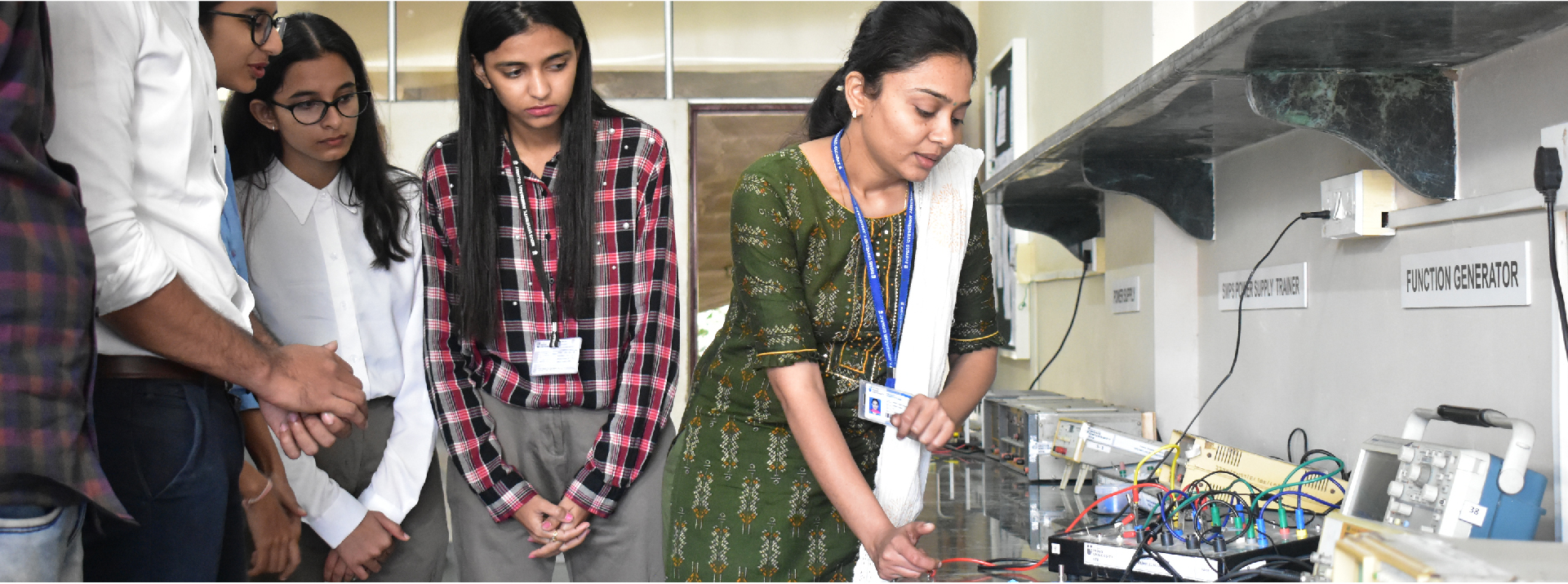
The Electronics and Communication Engineering program focuses on developing specialists capable of designing and implementing modern electronics and communication systems. The department emphasizes strong foundations in communication engineering, digital systems, and embedded technologies supported by experienced faculty and practical learning environments.

Program Overview

The program provides in-depth knowledge of analog and digital communication, digital logic circuits, signal processing, embedded systems, and networking technologies. The curriculum integrates theoretical learning with hands-on projects and practical assignments to bridge academic concepts with real-world applications.

Program Highlights / Key Features

Course Details


Curriculum & Learning Areas
Industry Exposure & Practical Learning
Career Opportunities
Why Choose This Program at Indus University
Eligibility Criteria
Admission Process

Curriculum & Learning Areas

Core Technical Areas

  • Analog and digital communication
  • Digital logic and circuits
  • Signal processing
  • Microprocessors and microcontrollers
  • RF engineering and networking

Advanced / Emerging Areas

  • Embedded systems
  • Communication technologies

Industry Exposure & Practical Learning

  • Laboratory experiments
  • Mini-projects
  • Industry-oriented assignments
  • Practical sessions aligned with industry trends

Career Opportunities

Job Roles

  • Communication Engineer
  • Electronics Engineer
  • Network Engineer
  • RF Engineer
  • R&D Engineer

Career Sectors

  • Telecommunications
  • Electronics industries
  • Public sector enterprises
  • Communication technology organizations

Why Choose This Program at Indus University

  • Experienced faculty
  • State-of-the-art laboratories
  • Practical learning approach
  • Industry-oriented curriculum

Eligibility Criteria

  • Candidate must have passed 10+2 (Higher Secondary) examination in the Science stream from a recognized board with minimum 45% in PCM as well as aggregate (According to ACPC admission norms)
  • Physics, Chemistry, and Mathematics (PCM) must be compulsory subjects.

Program Duration

4 Years (8 Semesters)

Admission Process

  • Admissions are conducted as per guidelines of the Admission Committee for Professional Courses (ACPC) and university norms.
  • A portion of seats is filled through centralized merit-based admission, while remaining seats are filled under Management Quota as per applicable regulations.

Core Technical Areas

  • Analog and digital communication
  • Digital logic and circuits
  • Signal processing
  • Microprocessors and microcontrollers
  • RF engineering and networking

Advanced / Emerging Areas

  • Embedded systems
  • Communication technologies
  • Laboratory experiments
  • Mini-projects
  • Industry-oriented assignments
  • Practical sessions aligned with industry trends

Job Roles

  • Communication Engineer
  • Electronics Engineer
  • Network Engineer
  • RF Engineer
  • R&D Engineer

Career Sectors

  • Telecommunications
  • Electronics industries
  • Public sector enterprises
  • Communication technology organizations
  • Experienced faculty
  • State-of-the-art laboratories
  • Practical learning approach
  • Industry-oriented curriculum
  • Candidate must have passed 10+2 (Higher Secondary) examination in the Science stream from a recognized board with minimum 45% in PCM as well as aggregate (According to ACPC admission norms)
  • Physics, Chemistry, and Mathematics (PCM) must be compulsory subjects.

Program Duration

4 Years (8 Semesters)

  • Admissions are conducted as per guidelines of the Admission Committee for Professional Courses (ACPC) and university norms.
  • A portion of seats is filled through centralized merit-based admission, while remaining seats are filled under Management Quota as per applicable regulations.

B.Tech in Electronics & Communication Engineering

Why choose this program at Indus University?

The program offers modern labs, experienced faculty, practical training, internships, and strong placement support.

What is the scope of ECE?

Graduates can work as Communication Engineers, RF Engineers, Network Engineers, Embedded Systems Engineers, and R&D Engineers.

What are the career opportunities after ECE?

Career opportunities exist in organizations like BSNL, MTNL, BHEL, SAIL, and ONGC.

Does the program include practical learning?

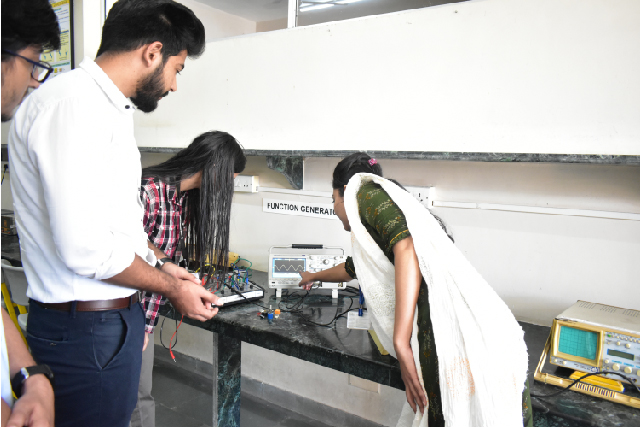
Yes. It includes lab experiments, mini-projects, workshops, and hands-on assignments.

Which top companies participate in campus recruitment at Indus University?

Indus University collaborates with an extensive network of top-tier corporate partners to provide exceptional career opportunities across multiple industries, featuring technology and IT leaders like Amazon, Oracle, Capgemini, e-Infochips, Synoptek, and Rishabh Software. Our engineering, automotive, and manufacturing recruiters include industry giants such as Tata Motors, Siemens, Audi, Kia, SKF, Bridgestone, POSCO, and Adani GAS, while the banking and insurance sectors are strongly represented by IndusInd Bank, IDFC First Bank, Capital First, Bajaj Allianz, and Apollo Munich Health Insurance. Additionally, our students secure dynamic roles with prominent organizations in healthcare, pharmaceuticals, and consumer retail, including Cadila Pharmaceuticals, eClinicalWorks, Godrej, JSW Paints, Decathlon, and Jaro Education, ensuring a comprehensive and robust placement ecosystem for all our graduates.
B.Tech in Electronics & Communication Engineering Course Details

Faculty Members

An imaginative educational plan of this program will empower understudies..
Discover More

B.Tech in Electronics & Communication Engineering admission and eligibility

Laboratory

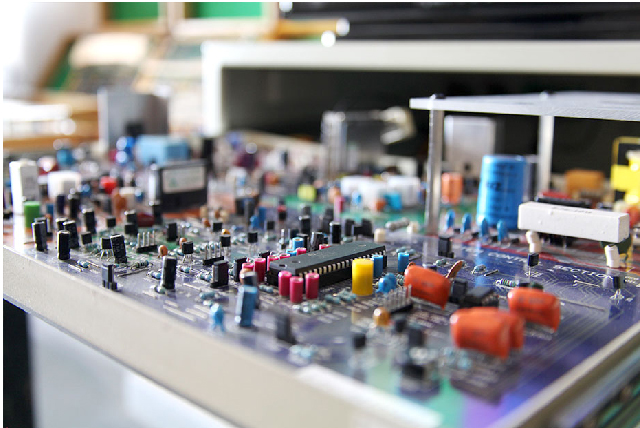
An imaginative educational plan of this program will empower understudies..

Discover More

Department Activities

Industrial Exposure Visit to Adani Mundra Port under Project Udaan

The Civil Engineering Department, IITE, Indus University, organized an Industrial Exposure Visit to Adani Mundra Port, Mundra, Kutch, Gujarat, on 7–8 October 2026, under Project Udaan, in coordination with the Adani Group. A total of 47 students from B.Tech. Civil and Electrical Engineering participated in the visit, accompanied by Dr. Ankit Sodha (Civil Engineering) and Dr. Sweta Shah (Electrical Engineering). The visit provided practical exposure to port infrastructure, cargo handling, logistics management, transportation systems, industrial operations, safety protocols, and sustainable infrastructure development. Students gained valuable insights into the functioning of a major port facility and the real-world application of engineering principles, bridging the gap between classroom learning and industrial practices. Indus University acknowledges the support of the Adani Group and Adani Foundation in facilitating this enriching learning experience.

Expert Talk on Energy-Efficient & Fire-Safe Electrical Systems in Modern Buildings at Indus University

The Civil and Electrical Engineering Departments of IITE, Indus University, organized an expert talk on “Energy-Efficient & Fire-Safe Electrical Systems in Modern Buildings” on 21 October 2026, featuring Shri Pankaj Dharkar, Founder-President of PDA. The session focused on electrical fire prevention, safety practices, and energy-efficient building systems, witnessing the participation of 250+ students from Engineering and Architecture disciplines. The talk provided valuable industry insights and highlighted the importance of integrating electrical safety and energy efficiency into modern building design.

Odoo Expert Session: Industry-Oriented Skill Development at Indus University

The Department of Computer Science & Engineering (CSE), IITE, Indus University, organized an expert session on “Odoo Framework: Industry-Oriented Skill Development” on 10 October 2026. The session provided 40+ students from Indus University and other universities across Gujarat with valuable industry insights, practical exposure to Odoo development, and an understanding of emerging career opportunities. Key highlights included Odoo framework applications, hands-on learning, development skills, upcoming hackathons, and career prospects in the Odoo ecosystem, empowering students with industry-relevant skills and preparing them for future opportunities in software development.